

Safe Communities Start with Prevention, Preparedness and Trust
Every Douglas County resident deserves to feel safe at home, at school, on the road, and throughout the community.
That requires well-trained, properly supported first responders who can respond quickly when people need help. It also requires leaders who plan ahead, invest in prevention, and understand that public safety begins long before an emergency call.
I do not support defunding law enforcement. Deputies, firefighters, dispatchers, and other first responders need the staffing, training, and equipment required to keep our communities safe.
But supporting first responders also means reducing the number of preventable crises they must manage. We should invest in reliable infrastructure, behavioral health care, youth services, substance use treatment, and emergency preparedness so people can get help earlier and first responders can focus on situations that truly require them.
Supporting law enforcement and investing in prevention are not competing approaches.
Strong communities need both.
Support the people who keep us safe
Douglas County depends on deputies, firefighters, dispatchers, emergency managers, victim advocates, detention staff, and other professionals who serve residents during some of the most difficult moments of their lives.
They deserve the staffing, training, equipment, and support required to do their jobs safely and effectively.
As commissioner, I will support:
Responsible staffing and long-term workforce planning
High-quality training and professional development
Mental-health and wellness resources for first responders
Reliable emergency communications and equipment
Strong recruitment and retention practices
Regional coordination among law enforcement, fire districts, municipalities, and service providers
Clear planning for the county’s continued population growth
Public safety professionals should not be asked to carry an unsustainable workload or compensate indefinitely for gaps elsewhere in county government. Supporting first responders means giving them the resources to succeed.
Prevent harm before it becomes an emergency
An effective public safety strategy does more than respond after something has gone wrong. It identifies risks early and strengthens the systems people depend on before a crisis begins.
Some of those systems are physical. Residents need reliable roads, sufficient capacity, clear evacuation routes and dependable emergency communications when wildfire, severe weather or another emergency threatens a community. Approving growth without first addressing access, evacuation and response capacity creates preventable risk.
Other systems are human. Behavioral health care, youth programs, family support, substance-use treatment, and stable housing can keep difficult situations from escalating into emergencies.
The connection is simple: public safety depends on people being able to reach safety, and on help being able to reach them. We should not expect deputies and other first responders to compensate for inadequate infrastructure or serve as the default response to every mental-health crisis, family emergency or unmet social-service need.
When county leaders plan ahead:
Residents have safe and reliable ways to evacuate
First responders can reach emergencies more quickly
Roads and communications systems are better prepared for crisis conditions
People experiencing behavioral-health crises are more likely to receive appropriate care
Officers can focus on situations requiring a law-enforcement response
Families have a better chance of finding lasting support
Emergency rooms and detention facilities face less unnecessary pressure
Prevention is not a substitute for law enforcement.
It is how we support law enforcement, protect residents and prevent avoidable emergencies before they occur.
Strengthen behavioral health crisis response
Douglas County’s Community Response Team model pairs law enforcement officers with behavioral health professionals to respond to people experiencing a crisis. That kind of partnership can help deescalate difficult situations, connect residents with treatment and reduce unnecessary incarceration or emergency room visits.
The county should maintain a stable, fully staffed crisis response capacity and ensure that teams can serve residents throughout Douglas County, including young people, schools and communities with fewer nearby services.
I will support:
Fully staffed community response teams
Strong coordination with healthcare and behavioral health providers
Follow-up services after the immediate crisis has passed
Youth and school-focused response capacity
Substance abuse treatment and recovery partnerships
Clear information so families know where to seek help
Sustainable funding rather than dependence on temporary grants alone
A crisis response system should not end when the immediate danger has passed. Residents and families need a path toward continued care and stability.
Prepare for wildfire and other emergencies
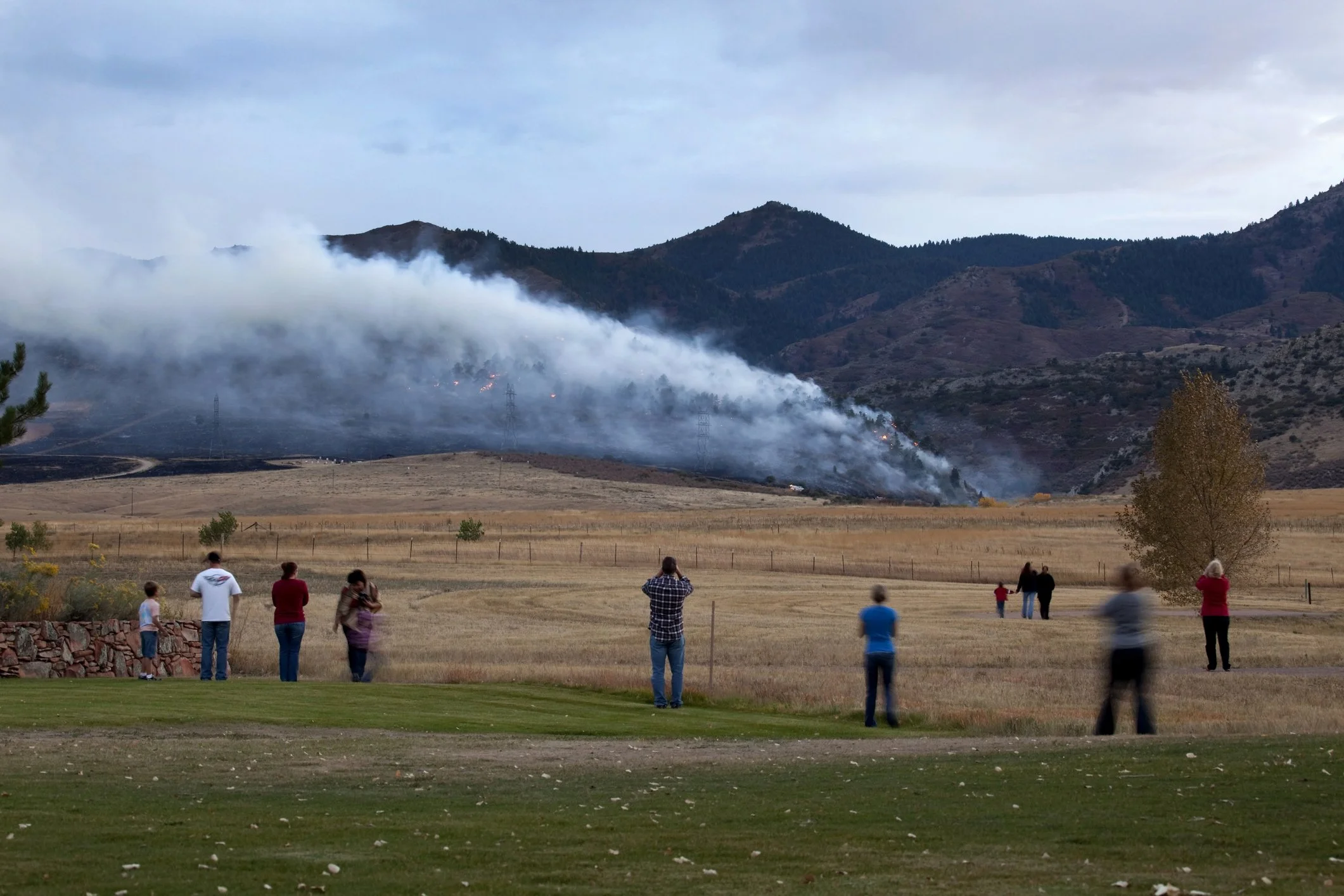
Wildfire is one of the most serious risks facing Douglas County. Our growing population, rural communities, open spaces and wildland-urban interface require constant attention to mitigation, evacuation planning and emergency communication.
County government should work closely with fire districts, municipalities, homeowners, utility providers and regional partners to reduce risk before a fire begins and respond effectively when one occurs.
My priorities include:
Continued wildfire mitigation and fuel reduction
Clear evacuation routes and plans
Reliable emergency alerts
Public education and neighborhood preparedness
Coordination across jurisdictions
Support for rural and hard-to-reach communities
Responsible planning for new development in high-risk areas
Adequate water access and emergency infrastructure
Emergency planning must also address severe weather, flooding, extreme heat, utility disruptions and other events that can threaten lives and property.
Residents should know how the county is preparing, what they should do and where they can find accurate information during an emergency.
Support school safety through coordinated partnership
School safety is primarily the responsibility of the Douglas County School District and its elected Board of Education. County commissioners should respect that authority and the district’s expertise rather than trying to direct school operations from outside the system.
The county still has an important supporting role. Commissioners can help coordinate law enforcement, behavioral health resources, emergency planning, and other services that cross jurisdictional lines.
Those investments should be made in partnership with the district and guided by the needs of individual schools. Not through a one-size-fits-all mandate from county government.
I will support coordinated partnerships that strengthen:
Communication among schools, families, law enforcement and first responders
Emergency planning and preparedness
Behavioral health prevention and early intervention
Early identification and reporting of potential threats
Bullying and harassment prevention
Safe, confidential ways for students to seek help
Training and support for the adults who work with children and adolescents
School resource officers (SROs) can be a valuable part of a school safety strategy, but decisions about their placement and role should be made collaboratively with the school district, educators, families, law enforcement, and the communities being served.
SROs should also be part of a broader system of support, not treated as a replacement for counselors, mental-health professionals, prevention programs, or trusted relationships between students and adults.
The county should be a strong and reliable partner. It should bring resources, coordination and public safety expertise to the table while respecting that the school district leads decisions about what happens inside our public schools.
Children learn best when they feel safe, supported and included.
Make growth part of the public safety conversation
Development decisions affect emergency response.
New neighborhoods can increase demand for deputies, firefighters, emergency medical services, road capacity and evacuation infrastructure. They can also place more residents in areas with wildfire, traffic or access challenges.
Public safety should be evaluated before development is approved and not treated as a problem to solve afterward.
Major proposals should consider:
Emergency response times
Road and intersection capacity
Evacuation routes and time to evacuate to safety
Wildfire and natural-hazard risks
Water availability
Staffing and equipment needs
Long-term operating costs
Contributions developers should make toward new infrastructure
Growth should not shift new risks and costs onto existing residents or public-safety agencies.
Strengthen trust, accountability, and civil liberties
Public trust makes public safety institutions more effective.
Residents are more likely to report crimes, cooperate with investigations and seek help when they believe they will be treated fairly, respectfully and within the bounds of the law. First responders are also safer when they have strong relationships with the communities they serve.
Accountability is not an attack on law enforcement. It is part of maintaining professional standards and public confidence.
I will support:
Clear policies and consistent enforcement
Transparent reporting on public safety outcomes
Responsible review of complaints and serious incidents
Training in de-escalation, crisis response, and constitutional policing
Strong protections for privacy and civil liberties
Public review and feedback of new surveillance technologies before they are adopted
Clear limits on how data is collected, stored, shared, and used
Technology such as automated license plate readers and camera networks like flock cameras may support investigations or help locate vehicles linked to serious crimes. But those tools should never create a system of broad, unregulated surveillance of residents simply going about their daily lives.
Before Douglas County adopts or expands any surveillance technology, the public deserves clear answers:
What specific problem is the technology intended to solve?
What information will it collect?
How long will that information be retained?
Who will have access to it?
Will it be shared with outside agencies or private companies?
What protections will prevent misuse?
How will the county measure whether it is actually effective?
Any use of these technologies should include public notice, narrowly defined policies, strong data-security standards, regular audits, and meaningful oversight.
Public safety should protect both our communities and our constitutional freedoms. We should not be required to sacrifice one for the other.
Focus resources where they make the greatest difference
Public safety budgets should reflect evidence, community needs, and measurable results.
The goal should not be to fund programs simply because they have always existed or because they produce a strong political talking point. County leaders should ask whether investments are preventing harm, improving response, building trust, and using taxpayer dollars effectively.
That means evaluating:
Response times
Staffing and retention
Crisis-response outcomes
Repeat emergency contacts
Prevention and diversion results
Community confidence
Emergency preparedness
Long-term costs and benefits
Residents deserve both strong public safety and responsible stewardship.
My commitments
As Douglas County Commissioner, I will work to:
Support the staffing, training, and wellness of first responders
Maintain strong emergency communications and regional coordination
Fully staff behavioral-health crisis-response teams
Strengthen prevention and early-intervention services
Ensure residents have safe evacuation routes and reliable emergency access
Expand wildfire mitigation and emergency preparedness
Support school safety through a coordinated partnership with the school district
Respect the school board’s authority and educational expertise
Ensure development decisions account for public-safety capacity
Promote transparency, accountability, and equal treatment
Require transparency, safeguards, and public oversight for surveillance technologies before any programs are implemented
Protect privacy and constitutional rights
Measure public-safety investments by their real community outcomes
Strong public safety requires more than slogans
Public safety should never be reduced to a political talking point.
It is the daily work of preventing harm, preparing for risk, responding effectively, and earning the trust of the people being served.
Douglas County can support strong first responders while investing in prevention. We can build the infrastructure people need to reach safety and help first responders reach them. We can hold institutions accountable while respecting the people who serve within them. We can use technology wisely without creating unregulated surveillance. And we can prepare for growth without waiting for our systems to become overwhelmed.
My goal is a Douglas County where residents feel safe, first responders feel supported, civil liberties are protected and county leaders take responsibility for preparing before the next crisis arrives.
What would help your neighborhood feel safer and better prepared?
I want to hear about the public safety concerns you see, the strengths we should protect, and the investments you believe Douglas County should prioritize.